

How Long Do Geysers Take to Heat Water?
19th June 2026 | Written By: Vinod Pottayil | Read Time: 3min | Last Updated: 19th June 2026
A hot shower can instantly improve a cold winter morning or a rainy day. However, before enjoying warm water, you need to wait for your geyser to heat it. So, how long does a geyser take to heat water?
Depending on the geyser capacity, wattage, thermostat setting, and water temperature, heating times can range from 1 minute for an instant geyser to 30 minutes for a large storage water heater.
In this guide, we’ll explain the factors that affect geyser heating time and share practical tips to improve heating efficiency.
Key Factors Influencing Geyser Heating Speed
-
Geyser Capacity:
The lower the geyser capacity, the quicker the heating time. For example, smaller geysers with a 2–3 litre capacity heat water faster than larger models with a 15–30 litre capacity. This is because smaller geysers have less water to heat.
-
Geyser Wattage:
Wattage refers to the power rating of geysers. The higher the wattage, the faster the heating is. For example, a 2,000-watt geyser will heat water more quickly than a 1,500-watt geyser of the same capacity. This is because it delivers more heat energy in the same amount of time.
-
Thermostat Setting:
A thermostat setting is the temperature level at which your geyser automatically stops heating the water. In simple words, it serves as a temperature controller.
A higher thermostat setting will give you hotter water, but take more time to heat the geyser. For example, a thermostat at 50-degree Celsius will give hot water faster than a 70-degree Celsius setting.
Geyser Capacity Typical Wattage Thermostat Setting Approximate Heating Time 1 Litre 1,500–3,000 W 50–60°C 1-2 minutes 3 Litres 1,500–3,000 W 50–60°C 2–5 minutes 6 Litres 1,500–2,000 W 50–60°C 3–7 minutes 10 Litres 2,0000 W 50–60°C 5–10 minutes 15 Litres 2,0000 W 60–70°C 10–15 minutes 20 Litres 2,000–3,000 W 60–70°C 12–20 minutes 25 Litres 2,000–3,000 W 60–75°C 15–25 minutes 30 Litres 3,000 W 60–75°C 20–30 minutes
Other Factors
-
Incoming Water Temperature:
Cold water during the monsoon and winter months makes the geyser work harder to give hot water. However, heating time is shorter in the summer season.
-
Geyser Age and Condition:
Older geysers can take a longer time to give hot water due to wear and tear and low efficiency.
-
Heating Element:
A heating element is a geyser component that converts electrical energy into heat, which is then used to warm the water in the tank. A high-quality, efficient heating element heats water faster.
-
Type of Geyser:
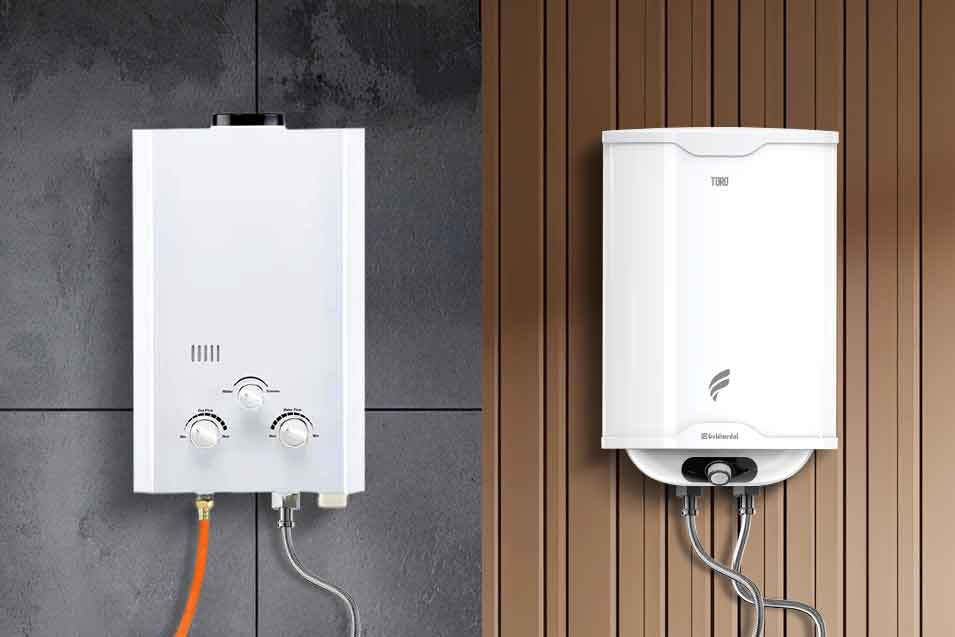
Instant or tankless geysers will heat the water instantly, as compared to large storage water heaters. More water to heat, more time the geyser needs to deliver hot water.
-
Sediment Build-Up in the Tank:
If your geyser receives hard water, scale or mineral deposits accumulate on the heating element. They act as an insulation barrier and slow down the heat transfer. Hence, water heating time increases.
-
Water Pressure:
When water pressure is low, the tanks fill slowly. This means that the geyser will also take more time to heat the water. Higher water pressure can put extra stress on valves, thereby causing leaks.
-
Power Supply/Voltage Fluctuation:
Low voltage or frequent power fluctuations can reduce the heating element’s power output, increasing heating time.
-
Tank Insulation Quality:
The geyser tank has an insulation material layer to prevent heat loss and maintain the hot water temperature.
Low-quality insulation material can adversely impact the heating efficiency.
Ways to Optimise Geyser’s Heating Efficiency
You can take the following measures to improve the heating time of your geyser:
- Choose the right capacity geyser for bathrooms, kitchens or utility areas.
- Opt for higher wattage geysers.
- Lower the thermostat setting, ideally to 50-60 degrees Celsius.
- Switch off the geyser when not in use.
- Descale the heating element at regular intervals.
- Set the water pressure to moderate for steady flow.
- Use a well-insulated geyser.
- Install a voltage stabiliser to manage power fluctuations.
- Get the geyser serviced at routine intervals.
- Replace the geyser if it needs frequent repairs or is more than 6-8 years old.
Conclusion
The heating time varies from one geyser model to another and depends on several factors. Choose a geyser that is a right fit for your needs. Make sure you keep it well-maintained. Smarter choices and small, timely precautions can lead to faster heating and better energy efficiency.

Frequently Asked Questions (FAQs) :
-
Q1. Why is my geyser taking longer to heat water?
There can be several reasons – inadequate geyser capacity, higher thermostat setting, low wattage, cold water supply, scale build-up on heating element, hard water supply, etc.
-
Q2. What is the ideal time for a geyser to deliver hot water faster?
It can vary from 1 to 30 minutes based on many factors.
For example, one factor is the type of geyser. An instant geyser with a 1-2 litre capacity will heat up instantaneously, while a storage water heater with 15-30 litres will take at least 15 minutes.
Another factor is wattage. A higher-wattage geyser is designed to produce more heat and warm the water faster.
-
Q3. Which is better for faster heating – instant or storage tank geysers?
There is no doubt that instant geysers have higher heating efficiency than storage tank water heaters. You will need to switch on the storage tank geysers 15-20 minutes before use.
-
Q4. How often should I get the geyser serviced?
A geyser should be serviced at least once a year, and especially immediately if you notice any issues. Its components may need repair or replacement for better heat efficiency and longer life span.
The maintenance will also take care of the removal of sediment build-up on the heating element, which often lowers the speed of heating.
-
Q5. Can a faulty thermostat affect heating time?
A faulty thermostat can cause the geyser to switch off earlier than it should. It may also not heat water to a desirable temperature or get overheated. You may need to run multiple heating cycles.
A simple repair or replacement can address the issue easily.