


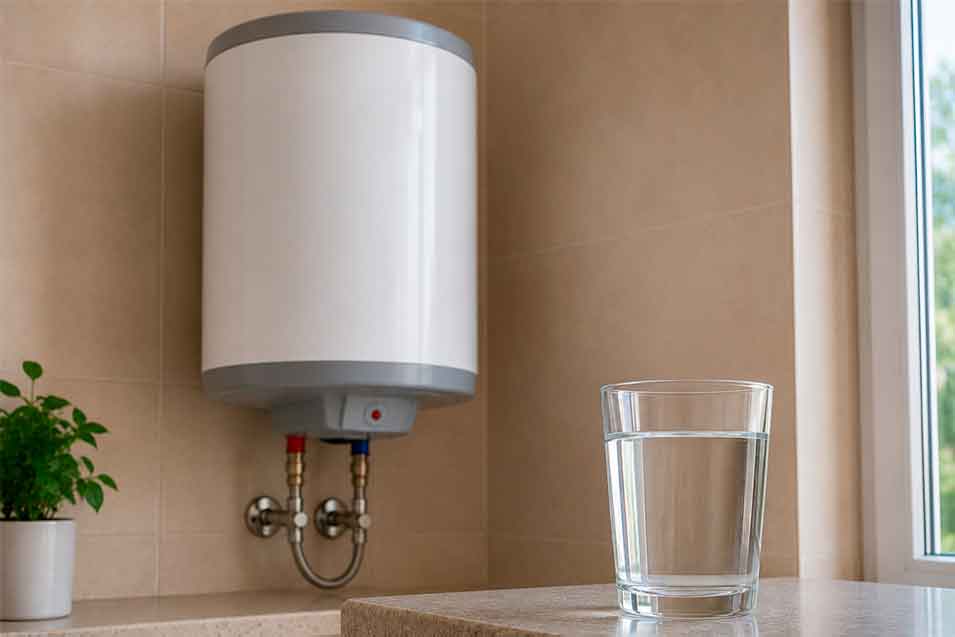
Is It Safe to Drink Water from a Geyser?
19th June 2026 | Written By: Rika Aash | Read Time: 3min | Last Updated: 19th June 2026
A geyser is a commonly used home appliance in Indian households. It provides hot water for bathing and cleaning, but is this hot water safe to drink? The answer is no. It is generally not recommended to drink water directly from a geyser. Even if the input water supply in your geyser is pure and treated, there are numerous factors that affect the quality of water stored and heated in the geyser. In this blog, we’ll explore why geyser water is not considered safe for drinking and the potential risks associated with consuming it.
Why Geyser Water May Not Be Safe to Drink
Geyser water is not safe to drink for the following key health and safety hazards:
-
Metal corrosion inside the tank:
Hot water in geysers can gradually corrode metals such as lead, copper, and zinc from internal heating elements and tank linings over time. Although modern geysers are designed to minimise corrosion, ageing or poorly maintained systems may release trace amounts of these metals into the water. This is one of the key reasons why drinking water should ideally come from a dedicated potable water source.
-
Mineral and sediment buildup:
Over time, minerals such as calcium scale and mineral sludge can accumulate inside the geyser tank. Sediments may collect at the bottom, especially in areas with hard water. These deposits can affect water quality and act as a breeding ground for impurities and contaminants.
-
Bacterial growth risks:
If a geyser is not used or maintained regularly, stagnant water can create conditions that allow certain microorganisms to grow. Most household geysers heat water to temperatures between 50°C and 75°C (122°F and 167°F), which may not be sufficient to fully sanitise the water. If the heated water remains stagnant or lukewarm inside the geyser for extended periods, certain bacteria may thrive. While maintaining the correct temperature can help reduce this risk, it does not guarantee that the water is safe for drinking.
-
Not intended for drinking use:
Most residential geysers are designed to provide hot water for bathing, washing, and other household tasks. They are not specifically engineered or certified as drinking water treatment systems. As a result, manufacturers generally do not recommend consuming water directly from a geyser.
Best Practices
- Use filtered or treated water for drinking and cooking.
- Maintain your geyser regularly, including periodic tank cleaning and inspection.
- Set the geyser temperature according to the manufacturer’s recommendations to help reduce bacterial growth.
- Flush the geyser periodically if recommended by the manufacturer, especially in hard-water areas.
Also Read: How does a Geyser work?
Takeaway
While water from a geyser may not always be harmful, it is not considered the safest or most reliable option for drinking. Factors such as sediment buildup, corrosion, and maintenance conditions can affect water quality. For everyday consumption, use water from a dedicated potable-water source and keep your geyser well maintained to ensure safe hot water for household use.

Frequently Asked Questions (FAQs) :
-
Q1. Can boiling geyser water make it safe to drink?
No, boiling geyser water may kill some bacteria, but it does not remove sediments, minerals, or trace metals. Therefore, it is generally not recommended for drinking.
-
Q2. Is geyser water safe for making tea or coffee?
No, geyser water is generally not recommended for making tea or coffee, as it may contain sediments, minerals, or trace metals.
-
Q3. How often should a geyser be cleaned?
A geyser should ideally be cleaned and serviced at least once a year. In areas with hard water, more frequent maintenance may be required to remove mineral deposits, improve efficiency, and extend the lifespan of the appliance.
-
Q4. Does a water heater remove bacteria from water?
No, a water heater or geyser is not designed to remove bacteria from water.


