


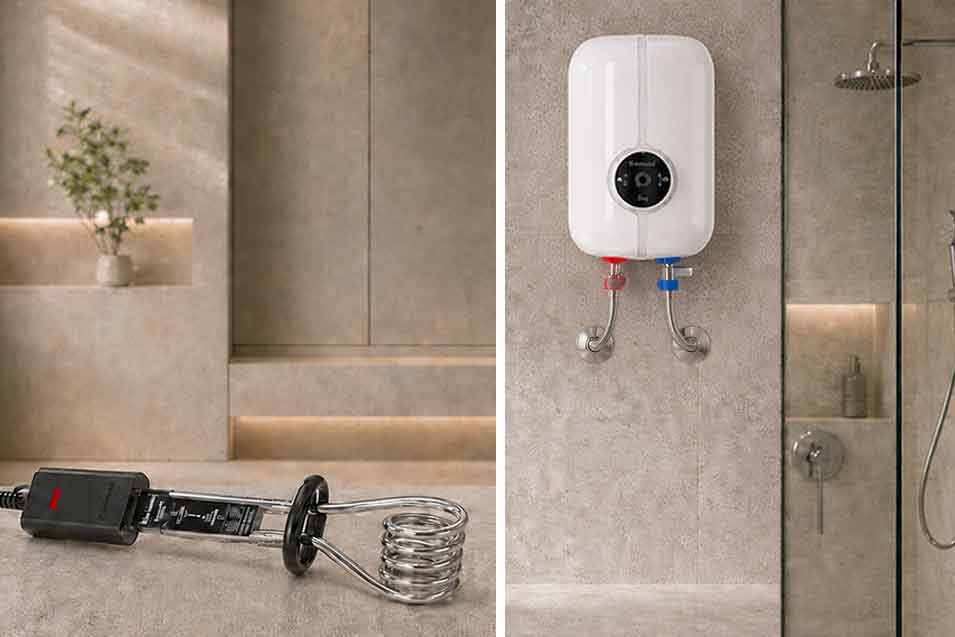
Immersion Rod vs Water Geyser: What Are the Differences and Which One Should You Choose?
25th July 2026 | Written By: Rika Aash | Read Time: 3min | Last Updated: 25th July 2026
Whether it’s the start of your day or the end of a long, tiring one, a hot bath is the perfect way to relax and recharge. While water geysers are the preferred choice in most households, immersion rods remain a popular option for heating water for bathing. But which one is right for you? Let’s explore the key differences between immersion rods and water geysers to help you choose the ideal solution for your lifestyle and daily hot water needs.
What is an Immersion Rod and How does it Works?
An immersion rod is a portable electric heating appliance used to heat water in a bucket. Lightweight, easy to use, and affordable, it is ideal for occasional use, travel, or places without a permanent water heating solution. It works by converting electrical energy into heat, which is transferred directly to the water through the immersed heating element, ensuring efficient heating with minimal heat loss.
What are the Advantages of an Immersion Rod?
- Portable and easy to store
- Low initial cost
- No installation required
- Suitable for occasional or temporary use
What are the Limitations/Disadvantages of an Immersion Rod?
- Not ideal for family or frequent use
- Limited safety features
- Requires manual operation
- Heating time depends on water quantity
What is a Water Geyser and How it Works?
A water geyser is a popular water heating appliance for bathrooms and kitchens, available in both storage and instant variants. It heats water using an electric heating element inside an insulated tank, while a thermostat maintains the desired temperature. Safety features such as an anode rod and pressure relief valve ensure reliable performance, durability, and safe operation.
What are the Advantages of an Electric Geyser?
- Ideal for daily household use
- Instant and consistent hot water supply
- Advanced safety features like thermal cut-out and pressure relief valve
- Energy-efficient operation with modern heating technology
- Long-lasting and convenient
What are the Limitations/Disadvantages of an Electric Geyser?
- Higher upfront investment
- Requires professional installation
- Occupies fixed wall space
Immersion Rod Vs Water Geyser: Key Differences
| Features | Immersion Rod | Water Geyser |
|---|---|---|
| Portability | Highly Portable | Fixed Installation |
| Installation | Not Required | Professional Installation Required |
| Safety | Direct Water Contact Needs Supervision | Enclosed Element with Thermostat Controls |
| Water Heating Speed | Slow Compared to Water Geysers | Heats Water Quickly |
| Water Volume | Suited for One Bucket | Suitable for 10 to 25 litres |
| Energy Efficiency | Consumes More Electricity Over Longer Usage | More Energy-efficient for Regular Use |
| Cost | Low | Higher Upfront Investment |
| Convenience | Manual Operation | Automatic Operation |
| Application | Temporary or Occasional Use | Daily Household Use |
Which One to Choose Between Immersion Rod Vs Water Geyser?
Choosing between an immersion rod and a water geyser largely depends on your usage and hot water requirements. The following factors can help you determine which appliance best suits your needs:
- Household Size: Larger families will benefit from a water geyser, as it provides a continuous supply of hot water without manual intervention.
- Frequency of Use: If you need hot water every day, a water geyser offers greater convenience. An immersion rod is better suited for occasional use.
- Budget: Immersion rods have a lower upfront cost, whereas water geysers require a higher initial investment but offer greater long-term value.
- Safety: Modern water geysers come equipped with features such as thermal cut-outs, pressure relief valves, and automatic shut-off. Immersion rods require careful handling and should never be left unattended while in use.
- Energy Efficiency: A 5-star-rated water geyser is generally more energy-efficient for regular use, while immersion rods are suitable for heating smaller quantities of water.
- Installation: Immersion rods require no installation and are ready to use, whereas water geysers need professional installation.
- Portability: Immersion rods are lightweight and portable, making them ideal for travel or temporary accommodation. Water geysers are permanently installed.
- Convenience: Water geysers provide instant access to hot water with minimal effort, while immersion rods require manual operation and monitoring.
- Durability: Water geysers are designed for long-term daily use, whereas immersion rods are better suited for occasional or temporary applications.
Conclusion
Both immersion rods and water geysers have their own advantages and are suited to different needs. If you require an affordable and portable solution for occasional use, an immersion rod is a practical choice. However, if you need a safe, convenient, and reliable source of hot water for everyday use, a water geyser is the better investment. By evaluating your lifestyle, usage patterns, and budget, you can choose the appliance that best meets your hot water requirements.

Frequently Asked Questions (FAQs) :
-
Q1. Is an immersion rod water heater safe?
Yes, an immersion rod water heater is safe when used correctly and according to the manufacturer’s instructions. Always ensure the rod is fully submerged before switching it on, avoid touching the water while it’s operating, and unplug it before removing it from the bucket to minimise the risk of electric shock.
-
Q2. Can I leave immersion on all the time?
No, you should not leave an immersion rod switched on continuously. Once the water reaches the desired temperature, switch it off and unplug it to prevent overheating, save electricity, and ensure safe operation.
-
Q3. Is it cheaper to heat water with an immersion heater?
Yes, an immersion heater can be cheaper for heating a small quantity of water because it heats the water directly. However, for regular or larger-volume use, an energy-efficient water heater with proper insulation may be more economical and convenient.
-
Q4. How long to use an immersion rod?
An immersion rod typically takes 10–20 minutes to heat a bucket of water, depending on its wattage and the amount of water. Always switch it off and unplug it once the water reaches the desired temperature, and never operate it outside the water.
-
Q5. Which is better for a family of 3? Immersion Rod or Geyser?
For a family of three, a storage water geyser is generally the better choice, as it provides a larger supply of hot water, greater convenience, and enhanced safety for daily use. An immersion rod is better suited for occasional or single-user heating needs.


