

Difference Between Wire and Cable: Meaning, Types & Comparison Table
09th April 2025 | Written By: Vinod Pottayil | Read Time: 3min | Last Updated: 07th October 2026
The stability of electrical set up of residential, commercial and industrial infrastructure is largely dependent on wires and cables. You may not know the difference between the two as a layman. Wires and cables are distinct from each other on several parameters. Read the comprehensive guide below to make the appropriate choice.
What Is an Electrical Wire?
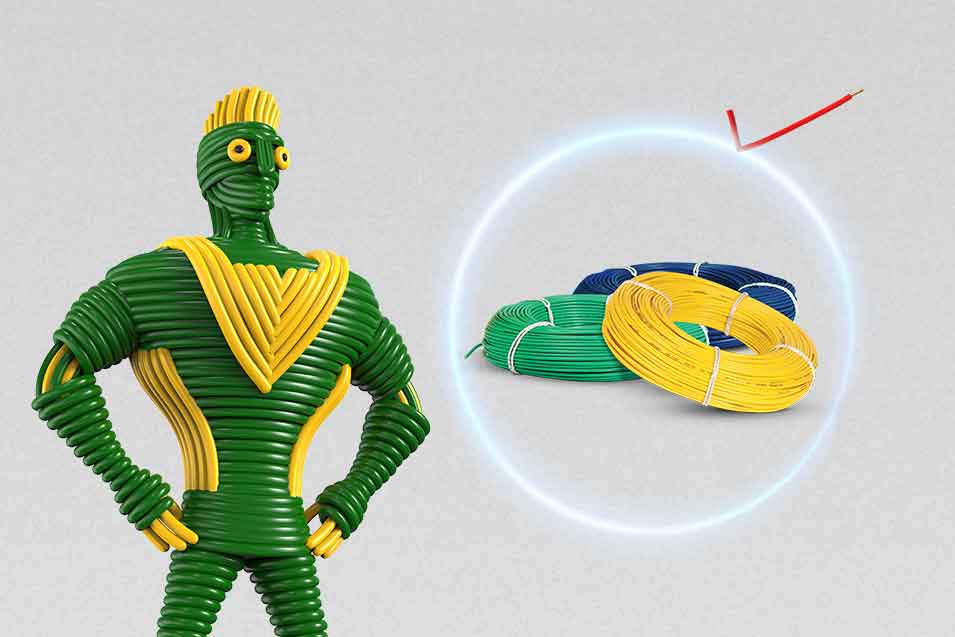
An electrical wire is a conductor, usually made of copper or aluminium, that carries electric current from one point to another. It is typically covered with an insulating material to help prevent electric shock, short circuits and accidental contact.
What Is an Electrical Cable?
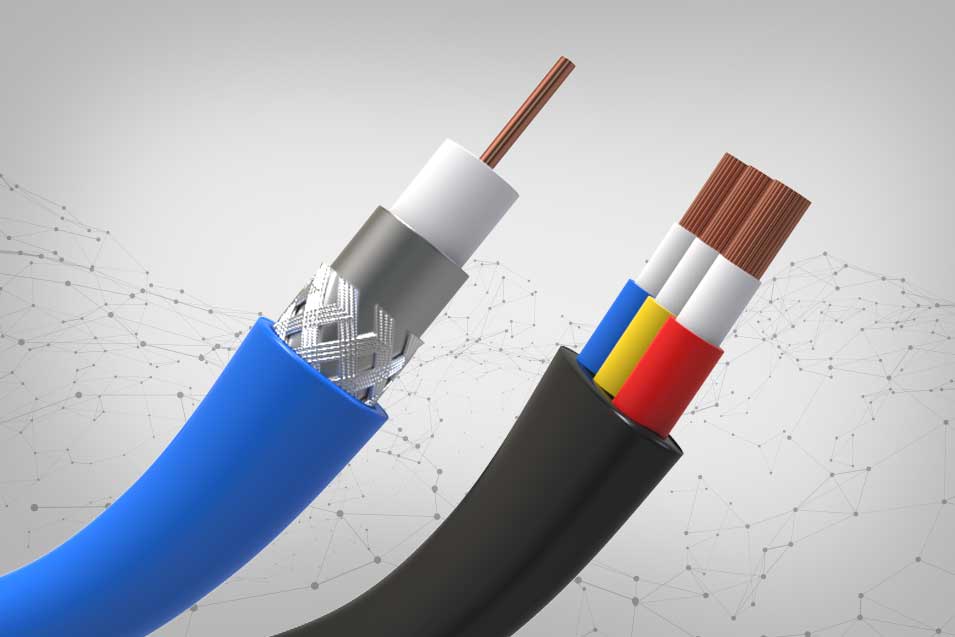
An electrical cable is a group of one or more insulated wires enclosed within a protective outer sheath. It is designed to carry electrical power or signals safely while providing added protection against moisture, heat, abrasion and physical damage.
Wire vs Cable: Quick Comparison Table
| Factor | Electrical Wire | Electrical Cable |
|---|---|---|
| Construction | Usually a single conductor, either solid or stranded | Contains one or more insulated conductors grouped together |
| Insulation | May be bare or insulated depending on the application | Usually includes individual insulation plus an outer protective sheath |
| Protection | Offers comparatively less external protection | Provides greater protection against moisture, abrasion and physical damage |
| Flexibility | Depends on whether the conductor is solid or stranded | Varies according to cable construction and application |
| Common Uses | Internal wiring, electrical connections and circuits | Power distribution, appliances, industrial systems and communication |
Key Differences Between Wire and Cable
A wire usually consists of a single conductor, while a cable contains one or more insulated conductors grouped together within a protective outer sheath. Wires may be bare or insulated and are commonly used for internal electrical connections, whereas cables generally offer greater protection against moisture, abrasion and physical damage, making them suitable for power distribution, appliances, industrial systems and communication. Cables also often use colour-coded conductors for easier identification, while the flexibility of both wires and cables depends on their construction and intended application.
-
Configuration
Wires are single conductors of electricity. They are bare and twisted in appearance. Such wires are devoid of insulation. However, some wires have a direct and thin Polyvinyl Chloride (PVC) sheathing.
A cable is a group of multiple wires clubbed as a single unit. They are arranged together in a twisted or bonded way in a protective layering. A cable always has insulation.
-
Material Composition
Copper and aluminium are the base materials in wires and cables. However, the copper used in custom applications may contain plating or coating of tin, gold or silver.
-
Application
Wires transmit electricity from one point to another in low-scale applications. They have use cases in household wiring, electronic gadgets and overhead transmission lines. A few examples are wires used in power sockets, lighting equipment, speakers and air conditioners.
Cables are used for diverse, high-power, longer range and complex applications. They have use cases in telecommunication, construction, manufacturing, power distribution, networking and audio-visual signal transmission. Extension cords, High-Definition Multimedia Interface (HDMI) cables, Ethernet cables, and USB cables are a few examples of cables.
-
Flexibility
Wires, especially stranded ones, are generally easier to bend and route through electrical installations, while the flexibility of a cable depends on its size, number of conductors and protective layers. Flexible wires are useful in applications where frequent bending or movement is required. Cables with thicker insulation or multiple protective layers may be less flexible but provide better durability and protection.
-
Durability
A higher flexibility indicates a higher vulnerability to wear and tear in wires. They have a very low durability in harsh conditions.
The multi-stranded cables offer more durability than wires in terms of heat and moisture resistance.
-
Voltage
Wires have low-voltage power and limited transmission signal. This is one of the reasons why they are commonly used in household wiring.
Cables have high voltage power and strong transmission signal. Hence, they are in higher demand in industries that require additional electric current or data load capacity.
-
Size: AWG Gauge vs Square Millimetre (sq mm)
Gauge refers to the thickness or diameter of wires and cables. The lesser the gauge, the thicker the wire or cable is. For example, a 12 gauge wire has a larger diameter than a 14 gauge wire. A lower gauge also indicates more current-carrying capacity.
Most residential constructions used wires of 8, 10, 12 and 14 gauge.
Telecommunications or other high-current industries use cables of 22-28 gauge.
-
Cost
Wires are comparatively cheaper than cables. However, their cost-effectiveness should be determined in terms of their material composition, gauge, voltage, breakage and applications.
Types of Wires
There are three types of wires:
-
Solid Wire:
This is a single but solid and effective strand of conductor. It has low resistance and better durability.
-
Stranded Wire:
This is a layout of multiple tiny strands into a single conductor. It can withstand wear and tear more efficiently.
-
Tinned Wire:
This is made from tin-based copper material. It keeps the oxidation at bay in humid climates.
Types of Cables
There are seven types of cables:
-
Twisted Pair Cable:
This cable comprises sets of twisted copper wires with jacketing. They are commonly used in networking.
-
Armoured Cable:
This is a metallic sheathed cable used in applications where cables remain visibly exposed.
-
Fibre Optic Cable:
This is a cable made from glass or plastic fibres. It enables quick data transmission in the telecommunication sector.
-
Coaxial Cable:
This cable has sturdy insulation, making it an ideal choice for television and internet signals.
-
Non-Metallic Sheathed Cable:
This cable has a minimum two insulated conductors. It is enclosed in a non-metallic jacket. It is suitable for indoor wiring in homes.
-
High-Temperature Cable:
This cable is made from extreme heat-resistant materials. It has applications in furnaces and boilers.
-
Underground Feeder Cable:
This cable has distinctive moisture-resistant plastic jacketing. It is suitable for underground or open-air electrical fittings.
Which Wire Size Is Used for Home Wiring in India?
For home wiring in India, 1.5 sq mm copper wire is commonly used for lighting and fan circuits, while 2.5 sq mm is typically used for regular power sockets. Higher-load appliances such as air conditioners, geysers or ovens may require 4 sq mm, 6 sq mm or larger, depending on the load, circuit design and installation requirements. The final wire size should always be selected by a qualified electrician according to the connected load and applicable electrical standards.
Wire or Cable: Which Should You Use for Home Wiring?
For most home wiring in India, insulated copper wires are commonly used inside conduits for lighting, fans and socket circuits. Cables are generally preferred where multiple conductors need to run together or where extra mechanical protection is required, such as for mains supply, outdoor connections or certain appliances. The right choice depends on the application, load and installation method, so it is best to follow the electrical design and use a qualified electrician.
Safety Standards: ISI Mark, FR and FRLS Wires
When choosing wires for home electrical installations in India, safety certifications and insulation type are important considerations. ISI-marked wires indicate compliance with applicable Indian Standards for quality and safety. FR (Flame Retardant) wires are designed to resist the spread of fire, while FRLS (Flame Retardant Low Smoke) wires are designed to limit flame spread and produce less smoke in the event of a fire. For residential wiring, selecting certified wires with suitable fire-safety properties can help improve overall electrical safety.
How to Choose the Right Wire or Cable
When choosing wires for home electrical installations in India, safety certifications and insulation type are important considerations. ISI-marked wires indicate compliance with applicable Indian Standards for quality and safety. FR (Flame Retardant) wires are designed to resist the spread of fire, while FRLS (Flame Retardant Low Smoke) wires are designed to limit flame spread and produce less smoke in the event of a fire. For residential wiring, selecting certified wires with suitable fire-safety properties can help improve overall electrical safety.
Conclusion
Material, electrical load, local electrical compliances and energy efficiency are a few important factors you should consider for wire and cable fittings. However, safety factors should precede all other factors. It is advisable to opt for wires and cables that bear Indian Standards Institution (ISI) mark.

Frequently Asked Questions (FAQs) :
-
Q1. Is every cable made of wires?
Yes. An electrical cable is made up of one or more insulated conductors, commonly referred to as wires, enclosed within a protective outer sheath.
-
Q2. What is the difference between a conductor, a wire and a cable?
A conductor is a material, usually copper or aluminium, that allows electric current to flow through it. A wire is a conductor that may be bare or insulated, while a cable consists of one or more insulated wires enclosed together within a protective outer sheath.
-
Q3. Is copper or aluminium wire better for home wiring?
For most home wiring, copper wire is generally preferred because it offers better conductivity, requires a smaller conductor size for the same load, and is easier to terminate reliably. Aluminium is lighter and cheaper, but it typically needs a larger cross-section and more careful connections, so it is more commonly used for larger supply cables rather than internal household wiring.
-
Q4. What is a multi-core cable?
A multi-core cable contains two or more individually insulated conductors enclosed within a single outer sheath. It is commonly used where several electrical connections need to run together, such as in appliances, control systems and power circuits.