

Types of Insulators in Electrical Systems and Their Uses
04th September 2026 | Written By: Vinod Pottayil | Read Time: 3min | Last Updated: 04th September 2026
Insulators may sound like a highly technical term to a layperson, but they are an important part of every electrical system. A basic understanding of the role of insulators in electrical systems can help safeguard human lives and property.
Here is all you need to know about insulators.
Insulators and Their Importance
Insulators are materials or components/devices that resist the flow of electric current. They prevent electricity from coming into contact with people, other conductors, or unwanted surfaces. This way, they protect you against the risk of electric shocks, short circuits, and electrical fires.
A few examples of materials used in insulators are:
- PVC
- Rubber
- Glass
- Wood
- Ceramic
- Porcelain
- Mica
- Millboard
These materials are used to make or cover different electrical components (types of insulators), depending on their applications.
Properties of Insulators
- High electrical resistance
- Mechanical strength
- High dielectric strength
- Heat resistance
- Moisture resistance
- Weather resistance
- Durability
- Resistance to tracking and arcing
- Chemical resistance
- Low water absorption
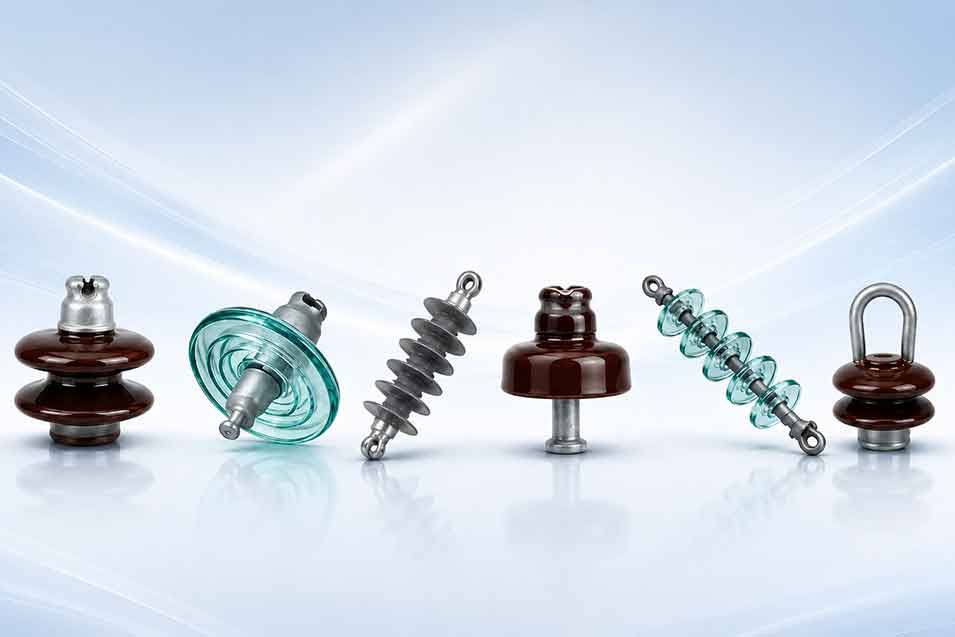
Types of Insulators and Their Uses
Various types of insulators are used in electrical systems, depending on their applications.
-
Pin Insulator:
This insulator isolates a wire from physical support such as a bolt, metal pin or utility pole. It is secured to the cross arm of the supporting structure.
Uses:
- Overhead transmission lines
- Distribution lines
- Power substations
- Railways
- Industrial and commercial buildings
- Other lower and medium-voltage distribution systems
-
Strain Insulator:
A strain insulator, also known as a tension insulator, can handle mechanical stress or high tensile loads experienced by conductors. It is usually located at the ends of lines or at corners.
Uses:
- Sharp curves and angles in transmission lines
- River and highway crossings
- Dead-end poles/towers
- Power lines
- Radio antennas
-
Suspension Insulator:
This insulator suspends conductors from transmission towers. It is designed from separate insulator units connected by metal links to look like a string or chain.
Uses:
- High-voltage transmission and distribution lines
- Long-distance transmission lines
- High-voltage direct current grids
- Polluted or extreme weather regions
- Large electrical substations
-
Disc Insulator:
It has a disc-shaped design and is made of glass or porcelain. Multiple discs are connected to form a string and bear high voltages.
Uses:
- Overhead transmission lines
- Distribution lines
- Power generation lines
- Industrial installations
- High-voltage applications
-
Shackle/Spool Insulator:
A shackle or spool insulator supports secondary counters mounted to the pole directly using bolts and crossarms. It can be placed in vertical or horizontal orientation.
Uses:
- Low-voltage transmission lines
- Residential installations
- Small commercial applications
-
Bus Post Insulator:
A bus post insulator provides structural support, rigid mechanical support, and electrical isolation to busbars.
Uses:
- Busbars
- Switchgears
- Electric panels
- Electrical substations
- Medium and high-voltage applications
-
Long Rod Insulator:
This is a long porcelain or composite material, single-piece rod designed to increase its mechanical strength. Its puncture-proof construction prevents internal short-circuiting.
Uses:
- High-voltage transmission lines
- Polluted environmental zones
- Tension or suspension settings
- Railway electrification
- Power substations and terminal structures
-
Polymer Insulator:
Polymer insulators typically consist of a fibreglass-reinforced polymer core covered with a weather-resistant polymer housing (outer insulating covering), often made of silicone rubber. This construction makes them lightweight, durable, and weather proof. They are also known as composite or silicone rubber insulators.
Uses:
- Electrical substations and switchyards
- Overhead transmission and distribution lines
- Coastal and industrial zones
- Railway electrification
- Seismically active zones
-
Stay Insulator / Guy Insulator / Egg Insulator:
A stay insulator, typically made of porcelain, is installed in the stay wire used to support an electrical pole. It is designed to help prevent the lower section of the stay wire from becoming electrically live if the insulator fails or is damaged.
Uses:
- Low and medium voltage utility poles
- Telecommunication poles
- Overhead power lines at corners or intersections
-
Thermal Insulator:
Many electrical components generate heat during operations. Thermal insulator controls this heat, protects sensitive components from overheating, and improves the lifespan of the electrical system. It is made of ceramic, mica, porcelain, fibreglass, or silicon.
Uses:
- Transformers
- Electric motors and generators
- Busbars
- Electrical enclosures
- Switchgear and control panels
Choosing the Right Insulator
A few key factors to bear in mind while selecting an insulator for electrical systems are:
-
Voltage Level:
It should safely withstand the electrical system’s operating voltage.
-
Use/Application:
It should be suitable for specific uses such as overhead transmission lines, sharp angles or corners, substations, or residential/commercial buildings.
-
Environmental Conditions:
It should provide maximum resistance to various weather conditions such as rain, humidity, dust, pollution, sunlight, and coastal surroundings.
-
Mechanical Load:
It should have high strength to support the conductor and withstand mechanical forces such as wind and tension.
-
Heat and Temperature:
The insulation material should withstand the operating heat and temperature of the electrical system.
-
Durability:
It should retain its electrical and mechanical properties throughout its lifespan.
Conclusion
You don’t need to be an electrical expert to understand insulators. Know their basic types and uses to ask the right questions. It can also help you make safer, informed decisions about your property’s electrical system.

Frequently Asked Questions (FAQs) :
-
Q1. Are insulators the same as conductors?
No. They have opposite functions.
Conductors allow electric current to flow easily, while insulators restrict its flow and prevent unwanted electrical contact.
-
Q2. What are the benefits of insulators?
Insulators prevent electric shocks and electrical fires, reduce the risk of short circuits, and improve electrical safety.
-
Q3. What are the key properties of insulators?
Electrical insulators have high electrical resistance and dielectric strength, along with good mechanical strength and heat resistance. They are also generally durable and resistant to moisture, weather, and chemical damage.
-
Q4. How many types of insulators are there and what are their uses?
There are several types of electrical insulators, each designed for a specific application. Common types include pin, disc, suspension, long-rod, bus post, stay, and polymer insulators. They are mainly used to support and electrically isolate conductors in overhead lines, substations, and other electrical systems.
-
Q5. Which materials are best for insulators in electrical systems?
There is no best or most ideal material for every electrical system. Porcelain, glass, polymer, PVC, rubber, and ceramic are commonly used. The choice depends on the voltage, application, temperature, and environmental conditions.