

Geyser is Leaking? Know What could be the reason & its fixes
09th September 2026 | Written By: Rika Aash | Read Time: 3min | Last Updated: 09th September 2026
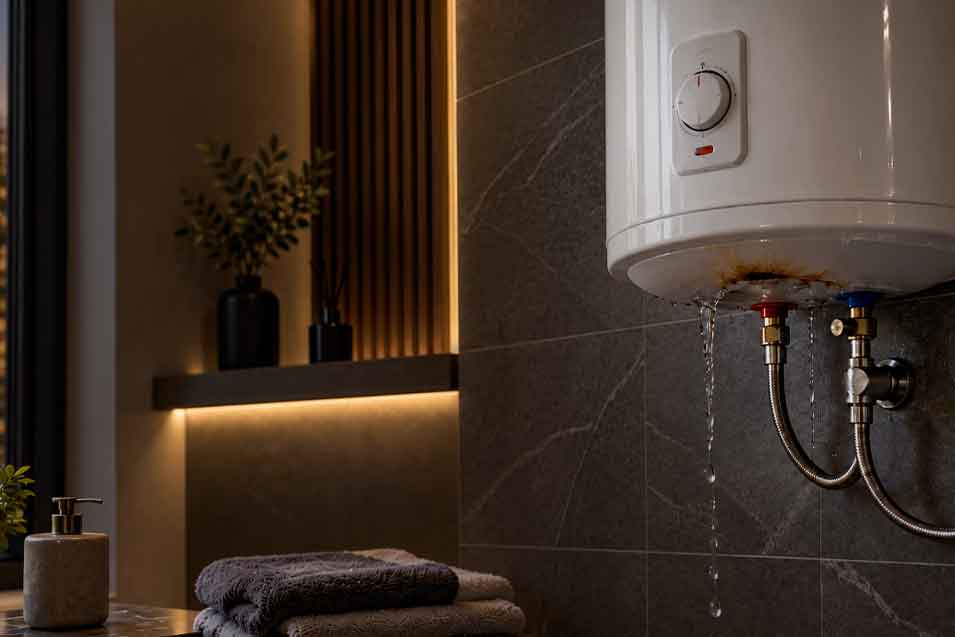
Leakage in a geyser is one of the most common issues that can occur during use and should never be ignored. A few drops of water may result from pressure release during heating. However, continuous leakage could indicate loose pipe connections, excessive pressure or an internal component that requires attention. Identifying the actual cause early can help prevent damage to the geyser, reduced efficiency and potential electrical hazards.
-
Loose Inlet or Outlet Connections
A loose connection at the water inlet or outlet pipe is one of the most common causes of geyser leakage. Regular use can cause fittings to loosen and seals to deteriorate over time, allowing water to escape.
How to Fix: Have the pipe connections and seals inspected by a qualified technician and tightened or replaced as required.
-
Leakage from the Safety Valve
The safety valve is designed to release excess pressure that builds up inside the geyser. A small amount of dripping may occur during the heating cycle as the water expands. However, continuous or excessive leakage could indicate high water pressure or a faulty safety valve.
How to Fix: Get the water pressure and safety valve checked by an authorised service technician. Never block, seal or tamper with the safety valve, as it is an important safety component.
-
Excessive Water Pressure
If the incoming water pressure exceeds the geyser’s recommended range, it can put additional stress on internal components, valves and connections, potentially resulting in leakage.
How to Fix: Get a technician to check the incoming pressure and recommend the appropriate pressure-control solution where required.
-
Heating Element or Gasket Leakage
The heating element is securely fitted inside the geyser with seals or gaskets to prevent water leakage. Over time, these seals may deteriorate or loosen, causing water to leak around the heating element assembly.
How to Fix: Switch off the geyser and have the gasket, flange and heating element inspected by a qualified technician. Any damaged seals should be replaced by trained service personnel.
-
Corrosion Inside the Tank
Storage geysers are continuously exposed to water, and over time, ageing and inadequate maintenance can lead to corrosion of the inner tank. Rust marks, discoloured water or leakage from the geyser body may indicate tank deterioration.
How to Fix: Internal tank corrosion usually requires professional inspection. Depending on the extent of the damage, the geyser may need to be repaired or replaced.
-
Faulty Drain Valve
Some storage geysers include a drain arrangement for servicing and maintenance. If the valve or its connection becomes loose or damaged, water may leak from the lower section of the unit.
How to Fix: Have the valve checked and replaced if necessary.
What Should You Do If Your Geyser Is Leaking?
If you notice any leakage from your geyser, switch it off immediately and close the water inlet. Do not attempt to open the geyser, handle electrical components, or repair any internal parts yourself. Always contact an authorised technician or electrician to address the leakage. Additionally, regular servicing, correct installation, and periodic inspection of valves and connections can help maintain your geyser and extend its lifespan.
Frequently Asked Questions (FAQs) :
-
Q1. Can a leaking geyser be repaired?
Yes, a leaking geyser can often be repaired, depending on the cause of the leak. Issues such as loose connections, faulty valves or worn-out seals can usually be fixed by a qualified technician.
-
Q2. How much does it cost to fix a leaking geyser?
The cost of fixing a leaking geyser depends on the cause of the leak, the parts required and the geyser model. Minor issues may be inexpensive to repair, while problems involving the tank or major components can cost more.
-
Q3. What is the common problem with geysers?
Common geyser problems include water leakage, insufficient heating, unusual noises, faulty thermostats and pressure-related issues. Regular maintenance can help prevent many of these problems and ensure safe, efficient operation.
-
Q4. Why does my geyser water smell bad?
Bad-smelling geyser water is often caused by bacteria buildup, stagnant water or reactions involving the tank’s internal components. Cleaning and servicing the geyser, along with flushing the tank, can usually help resolve the issue.
-
Q5. Which type of geyser is safe?
Both storage and instant geysers can be safe when they have essential safety features such as a thermostat, thermal cut-out, pressure relief valve and proper earthing. Always choose a certified product and ensure professional installation.