

Why Earthing Matters: How to Test & Maintain Earthing in Homes
18th December 2025 | Written By: Vinod Pottayil | Read Time: 3min | Last Updated: 18th December 2025
Electrocution is responsible for the deaths of almost 72,000 Indians in the period 2015-2020. Among the various reasons for electrocution-related incidents, inadequate earthing needs primary attention. Let’s understand what earthing is, why it matters and how you can ensure electrical safety in your homes.
Understanding Earthing and Its Significance
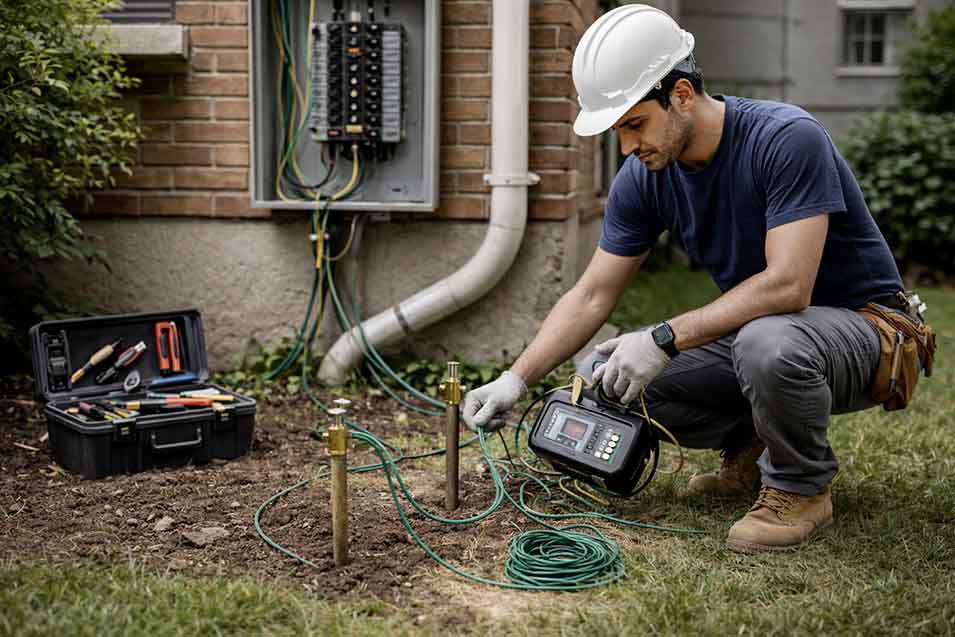
Earthing is a process through which the excess discharge of electrical current is transferred from your home’s electrical systems to the earth. It uses low-resistance wires and conductive devices concealed underground.
In layman’s terms, earthing is an electrical safety process. Improper earthing can pose a threat to humans and properties through live wires, bare wall sockets or circuit breakers.
Earthing is necessary for your home for various reasons:
- Protect you and your loved ones against electrical shocks.
- Safeguard the structural integrity of your home.
- Prevent damage to gadgets and other assets.
- Maintain voltage stability during power fluctuations.
- Prevent the spread of electrical shocks and fires throughout the building or locality.
- Lower electrocution injuries and deaths during natural calamities, especially floods and lightning strikes.
- Meet legal compliances.
- Ensure uninterrupted signals in telecommunication devices.
Testing Methods of Earthing
Earthing problems could occur due to corrosion, damaged components, oxidation, soil type, insufficient earthing depth, moisture content in the soil, groundwater level and other factors. Hence, it is imperative to test for earthing at regular intervals.
There are two common methods to test the earthing:
Test Light Bulb
Plug the light bulb or lamp wire into an electrical socket (positive port in the right hole, negative/neutral port in the left hole). The bulb or lamp should glow as per its technical specifications. Now, move the negative port to the earthing port (top hole) of the socket. If the bulb or lamp doesn’t light up or glows dimly, there is an earthing issue.
Multimeter
A multimeter is a device you can use to measure three aspects of electric currents:
- Alternate Current (AC) and Direct Current (DC)
- Voltage
- Resistance
The first step to test the earthing is to set the multimeter to AC or DC. Put the positive wire (red colour) into the hole labelled ‘V’ and the negative (black) into the hole labelled ‘COM’. Now insert the other end of the red probe into the negative/neutral port in the left hole of the socket. Put the other end of the black wire into the earthing port in the top hole.
Check the reading on the multimeter. The reading should be within the range of the maximum allowable voltage. If it exceeds the upper limit, then there is an overload and an issue with earthing.
While you can do these tests on your own, it is always advisable to consult a professional. An electrician or an electrical safety expert would be able to pinpoint the exact earthing or any other problems.
Earthing Maintenance
Routine maintenance of earthing is a vital parameter in electricity safety of your home. Unfortunately, most homeowners overlook it until some major electric failure arises.
Here are a few suggestions for earthing maintenance:
- Use the best-quality earthing wires and other materials at the time of electrical installation, whether it is a new home or you are renovating it.
- Conduct site inspection and soil resistivity at regular intervals for early detection of earthing faults. Call a professional for evaluation.
- Do earthing testing using the light bulb or multimeter methods once every few months.
- Check the earth pit construction routinely. Water the earth pit periodically to help retain its water content.
Conclusion
Proper earthing is a life-saving measure. It can mitigate potential fire and electrical hazards. Hence, make sure you invest in the best earthing system for your home.

Frequently Asked Questions (FAQs) :
-
Q1. What is earthing?
Earthing is an electrical safety process for the discharge of electric energy into the earth to prevent risks arising from leakage currents.
It is important to safeguard human life and property from electrical shocks.
-
Q2. Why do earthing issues occur?
Earthing issues occur due to weather conditions, soil conditions, quality of electrical components, insufficient earthing, etc.
-
Q3. Is it possible to do self-testing of earthing at home?
You can try the light bulb or multimeter device method to do self-testing. However, a professional would give you a more accurate evaluation.
-
Q4. Why is periodic maintenance of earthing necessary?
The soil conditions change over time. The electrical components may get corroded or damaged. The underground water may have lost its moisture. These are some reasons why you should schedule period maintenance of earthing.
-
Q5. What factors should be kept in mind regarding earthing during electrical design and installation?
Do research about the earthing system in your locality. You can contact the builder or the electricity board. Consult an electricity safety expert. Purchase high-quality earthing wires and equipment.