

Mandatory BEE Star Rating for Ceiling Fans: What Indian Consumers Need to Know?
30th May 2026 | Written By: Vinod Pottayil | Read Time: 4min | Last Updated: 30th May 2026
Most Indians, especially staying in hot and humid regions, use ceiling fans for at least 7-10 months in a year. According to a report, ceiling fans account for approximately 40% of residential electricity consumption. Unfortunately, 97% of these ceiling fans lack energy efficiency, leading to higher electricity bills and increased emissions.
That’s why the Bureau of Energy Efficiency (BEE) made it mandatory for all ceiling fans to display star ratings with effect from January 2023. BEE is a statutory body established by the Ministry of Power under the provisions of the Energy Conservation Act, 2001. The BEE star ratings indicate the energy efficiency of a fan.
Let’s delve deeper into the BEE star rating and its importance in energy conservation.
What is the BEE Star Rating?
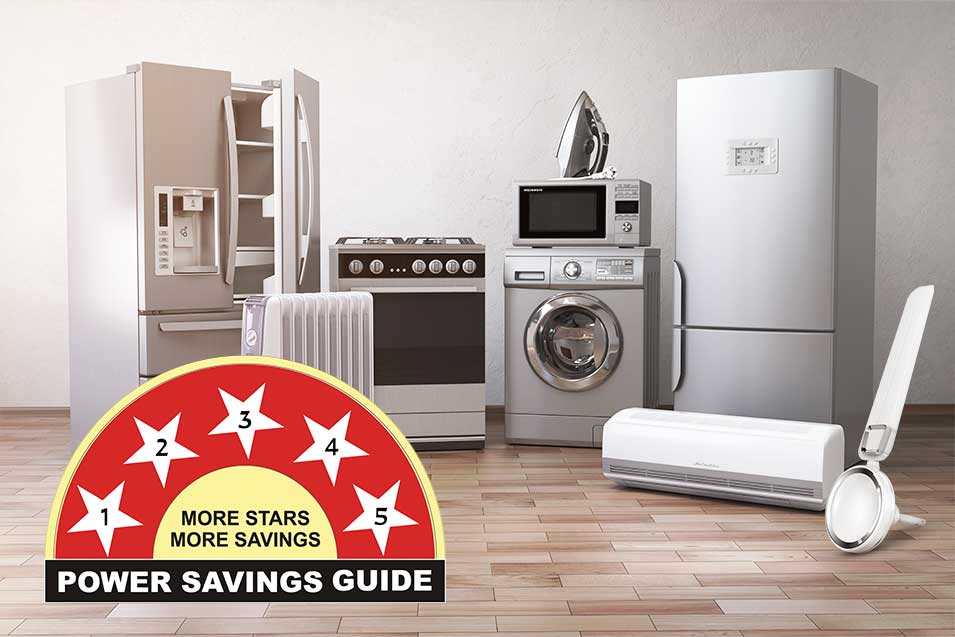
The BEE provides a star rating between 1 and 5 to several electric appliances, including ceiling fans. The purpose of this rating is to ensure that the manufacturers meet energy efficiency guidelines.
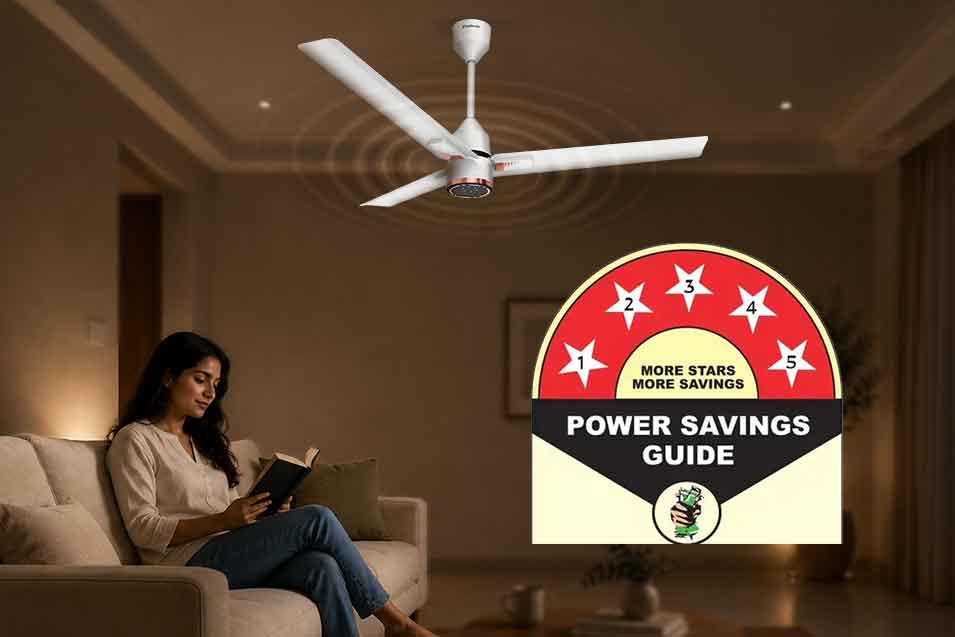
The higher the rating, the more energy efficient the fan is. For example, a 1-star fan has lower energy efficiency. A 5-star fan has the highest energy efficiency, thereby consuming less electricity. It helps consumers minimise their monthly power costs.
How Does BEE Evaluate Star Rating?
BEE considers three parameters for the star rating of ceiling fans:
- Service Value (efficiency of a fan to convert electricity into airflow)
- Air Delivery (amount of air a fan circulates in the room)
- Power Consumption (amount of electricity a fan uses)
Service Value = Air Delivery/Power Consumption
A fan that circulates more air while consuming less power gets a higher service value.
A higher service value is associated with a higher BEE star rating.
Relation Between BEE Star Rating and Energy Conservation
With nearly 41 million units of ceiling fans sold annually, they put a significant power burden on India’s economy. When you buy a ceiling fan with a higher BEE star rating, it consumes less electricity. It also reduces overall demand for electricity and pressure on power generation systems, especially during peak summer months.
This, in turn, lowers the carbon and greenhouse emissions, contributing to environmental conservation.
BEE Star Rating also creates awareness about responsible power usage among ceiling fan buyers. When buyers demand more energy-efficient fans with a higher BEE star rating, the manufacturers will also receive a push to increase their production and supply. As a result, it will have a larger positive impact on energy conservation in the long run.
Most Energy Efficient Ceiling Fans
Currently, most of the highest BEE star-rated ceiling fans are Brushless Direct Current (BLDC) fans. BLDC technology is far superior to conventional technology. They consume less power and deliver a strong air flow. Due to their optimal performance, they get higher service value and a higher BEE star rating.
However, it is important to know that not all the highest BEE-star-rated fans are BLDC fans and vice versa.
BLDC is the motor technology used in a ceiling fan, whereas the BEE star rating indicates the fan’s overall energy efficiency performance based on air delivery and power consumption. One BLDC fan may receive higher or lower rating than its peer BLDC fan. Similarly, a conventional fan may receive higher rating than a BLDC fan.
When you purchase a fan, your main priority should be to check the BEE star rating.
Conclusion
Global warming and climate change are serious concerns for our environment. Every little conscious effort can make a meaningful difference to energy conservation. It is a wise and smart choice to invest only in high BEE star-rated ceiling fans. They will not only keep your electricity expenses under control, but also support sustainable living.

Frequently Asked Questions (FAQs) :
-
Q1. What is a BEE star rating for ceiling fans?
A BEE star rating indicates the energy efficiency of a ceiling fan. The Bureau of Energy Efficiency (BEE) has made it mandatory for all ceiling fans to display star ratings with effect from January 2023. The purpose of this rating is to promote awareness about responsible energy consumption among the buyers.
-
Q2. How does the BEE star rating work?
A ceiling fan can get a BEE star rating on a scale of 1 (lowest) to 5 (highest). It is calculated using this formula:
Service Value = Air Delivery/Power Consumption
Here, service value indicates the amount of air delivered by a fan per watt of electricity consumption.
-
Q3. Which ceiling fans have the highest BEE star rating?
Usually, BLDC fans have higher BEE star ratings due to their highly efficient motor technology. However, not all BLDC fans may have a good or same BEE star rating.
-
Q4. Are BEE star-rated ceiling fans more expensive?
Yes, they may have a slightly higher purchase cost. However, the optimal performance, high energy efficiency, and lower electricity bills offset this cost in the long term.
-
Q5. Why are ceiling fans with high BEE star ratings important for energy conservation?
These fans consume less electricity without compromising on their performance. Your power bills go down. At the same time, they reduce carbon emissions and promote a green, sustainable environment. They also lower the burden on power plants.